Wednesday, March 28, 2012

Adobe Digital Marketing Suite Tackles Big Data with Predictive Marketing

http://www.marketwatch.com/story/adobe-digital-marketing-suite-tackles-big-data-with-predictive-marketing-2012-03-21

 Adobe announced new predictive marketing capabilities within the Adobe Digital Marketing Suite, reducing the complexity of uncovering hidden behavioral patterns in big data.  These advancements will help marketers more quickly sort through an increasing amount of data to find the most impactful insights as well as leverage vast amounts of historical data to predict future results.  Adobe is putting predictive analytics and more intelligent, forward-looking decision-making into the hands of digital marketers.
More specifically consumers can-
·         Change key metrics in various what-if scenarios to see how those changes will potentially impact business outcomes, such as orders and revenue
·         Forecast campaign results across search, social and display, and develop optimized media mix models, generating higher returns on multi-channel advertising initiatives
·         Identify leading indicators that point to upcoming risks and anomalies and adjust marketing strategies before a problem occurs or to take advantage of an opportunity
·         Identify interactions (leaving a comment, reviewing a product, etc.) with the highest probability to convert
·         Move from testing content to prescribing content based on what the predictive model predicts will be best
This is all able to be accomplished due to the sheer number of servers located worldwide.  There are over 23,500 servers that record over 5 trillion transactions annually and store 27 petabytes of data. 
Do you think this latest development will help adobe stay competitive in the technology sector?  They have recently done a revamp of their entire company’s leadership, do you think it is betteroff than it used to be? 

Saturday, March 24, 2012

In response to Danielle
What do you think of brands advertising on campus, through student ambassadors or sponsored activities? Should colleges allow this sort of thing, or should campuses be kept as ad-free as possible?


Currently the strongest advertising we have on campus is Pepsi.  Their name is plastered all over the place, in the DC, and in the student center.  I feel it is fine.  We are exposed to advertising where ever we go.  By the time a person reaches college they should be able to make educated decisions for themselves and not just take advertisements for granted.  
This summer I was looking for an internship.  I actually walked around the science center and read off each on of the signs that said who the room was sponsored by.  I then wrote down those names, as they were all local companies and looked them up.  Any that interested me, I sent an email to them with my resume.  I ended up getting a very exciting internship this summer due to this method.  I am extremely happy the science center had these signs posted.  
It is one of the first times I have really benefited by advertising, and the company that I was hired with also benefited as they were able to fill a void in their corporation.  
Do the advertisements on campus bother you?  Do you think we should add more to get more funding for the school?

Tuesday, March 20, 2012

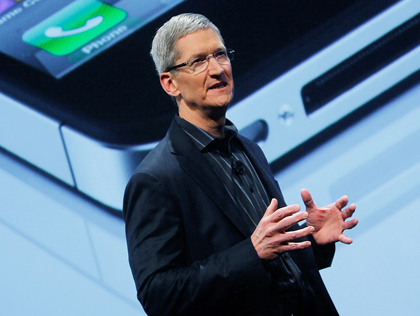
Apple to start quarterly dividend, buybacks

Apple to start quarterly dividend, buybacks

For the past decade, Apple has been one of the top producing stocks.  They aren’t the most innovative company, they aren’t using the most cutting edge technology.  Rather they are taking technology, improving it, and bundling it in a very user friendly package.  This method has made people of all technological abilities grow to appreciate Apple.  They have done such a nice job with it, that they have created almost a cult.  This cult they have created does much of the marketing for the company for free just by word of mouth.  Whenever a new product or version comes out, these people are the first to buy it, before considering whether or not they actually need it.  As a result of this, Apple’s stock has constantly improved.  They follow the trend, that most tech stocks don’t pay a dividend.  This is because they claim they want to invest their funds back into research and development. 
They now have almost 100 Billion in cash and investors want them to do something with that money. Apple will use a small portion of their huge amount of cash in order to buy back some employee stock, to make the rest of the stock more valuable.  They are also going to create a quarterly dividend in which they will pay back to all of their common stock holders. 
Some investors are wondering if this will inhibit their ability to stay as innovative as they have been. 
Should Apple pay a dividend?  What should it be?  Should it have the expectation to increase every year as it does with numerous other companies?  If they have a bad year should they still have to pay a dividend?  

Saturday, March 10, 2012

In response to Chris Morin
If you were a hardware store owner would you stock heavily before winter started? Or any season or wait for that season to start before you order huge inventories?
As a small (Or large) business owner sales forecasting is one of the hardest challenges.  Inventory is a hassle, it costs money, takes up space, and doesn't look good on the financial statements.  That being said, when a company orders an extremely large amount of product, they are able to get a better deal than if they only ordered a little bit.  Also the earlier in the season the less demand there will be, therefore it will be cheaper.  
As a business owner, I would consider what the product is, and how much it changes year to year.  In Chris's example snow shovels haven't changed very much year to year.
As a result I would buy a bunch of shovels very early in the season.  If I couldn't sell all of them, I would be able to store them for the next year.  Although it is expensive to store them I could still make money off them next year.  
Many businesses have been accused of raising prices of shovels during snowstorms.  This creates an ethical dilemma.  Although the supply and demand curves warrant the higher prices, should it be allowed?  

Tuesday, March 6, 2012

Advertising Ethics


Coke and Pepsi are both in the process of changing their soft drinks.  This is all due the possible cancer link in the caramel coloring that they put in their soda.  There has been research shown on mice that 4-methylimidazole has been known to cause cancer.  This has not been proved on humans, and quite frankly if it wasn’t for the state of California we probably wouldn’t have ever heard anything about it.  California has added 4-methylimidazole to their list of carcinogens, or cancer causing items.   As a result all Coke and Pepsi products that are brown in color would have to have a cancer warning label on it to be sold in the State of California. 
Although the American Beverage Association (ABA) stated they can’t find a link between the dye and cancer both Coca-Cola and Pepsi are removing it from their products.  They both claim it isn’t because of the potential of causing cancer, but rather the marketing headache it would wreak if they had to put a cancer warning on something consumers drink.  Remembering back to Coca-Cola’s extremely failed new coke taste last century both companies are promising there won’t be any change in the taste.
California is making these companies change their product because ti could be unhealthy.  Is it the companies responsibility to be proactive and change their product before there is a huge issue?  What would the damage be financially and psychologically to the companies if their products were proven to help cause cancer?  If it isn’t just an ethical responsibility to change, maybe it is in their best interest financially to try to make their product healthy for the consumers, to avoid issues in the long run.

Thursday, March 1, 2012

Restaurant Commercial Breakthrough


Founded in 1999 Phoenix Marketing International is one of the fastest growing marketing research firms in the U.S.  As with all companies they are constantly working to improve their products, and this week, they came through with one of the biggest breakthroughs.  Phoenix Marketing International has created a new product called the AdPi or the Advertising Performance Indicator express scorecard.  This  takes the common knowledge that the faster a company can get their product to production the better. 
The AdPi that Phoenix Marketing has produced is a twenty four hour testing service for restaurant ads.  With this service restaurants can test their ads, or their competitors ads at any time of the day against thousands of people across the entire nation.  This is a breakthrough concept as it used to take days, weeks, and sometimes even month of testing and gathering consumer reviews before they could air an advertisement.  Now the Phoenix Marketing has created this network of individuals that can quickly test the ads, and make sure they are getting their point across and aren’t offensive, it not only saves time but money as well.  This service is available for only $9500 which is much less than it would be if each company had to go out and survey people from across the country. 
There are concerns about how reliable the people in the network are.  All of them are in it for the money, how can we be sure they aren’t just trying to get it over with as quickly as possible?  A new idea like this is always extremely risky, companies spend millions of dollars a year on marketing, and even more if they have to fix their image.  If you were in charge of one of these massive companies, would you risk your company image for the savings this service provides?

Monday, February 27, 2012

John Smith


In Response to Professor Johnson 
Regarding Smith

In tough economic times people at least consider options they wouldn’t normally even dream of, in order to try to preserve what they have.  It is extremely easy for outsiders to sit back and say somebody shouldn’t do something in order to preserve their way of life.  Especially as an American male, there is a lot of pressure for them to be able to bring home the paycheck week in and week out.  That being said, how would you like it if you had your information sold to an advertising company? 
Most of the time this would be illegal anyways as the TOS would clearly state that the participants can’t give or sell their responses or information to anybody other than what was stated.  Even if it wasn’t illegal it was just morally wrong.  This violates the AMA’s three principles and possibly even worse, it ruins the chance of later, legitimate researchers to be able to get information out of these people.
This response seems pretty cut and dry, not many people would say that innocent people should have their information sold, just for the benefit of a select few.  When privacy becomes a potential security threat is another matter.  The TSA in airlines fights this issue every single day.  People want to be safe, but yet don’t want to have to give up any of their rights. 
Where should they draw the line?  If your name is on the no fly list because you are related to somebody should that be disclosed?  Should the TSA be allowed to rifle through all of your personal belongings?  Should they be able to scan your body and put up an exact proportional replica of it on the screen for all of the agents to see?